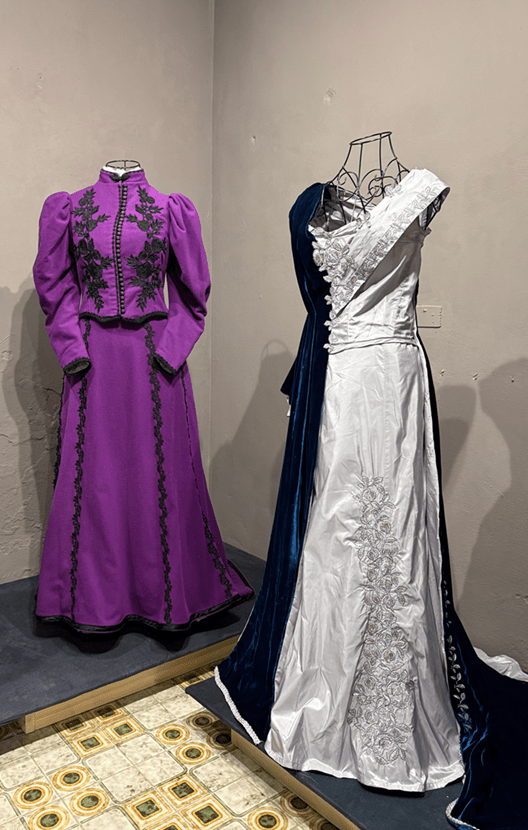
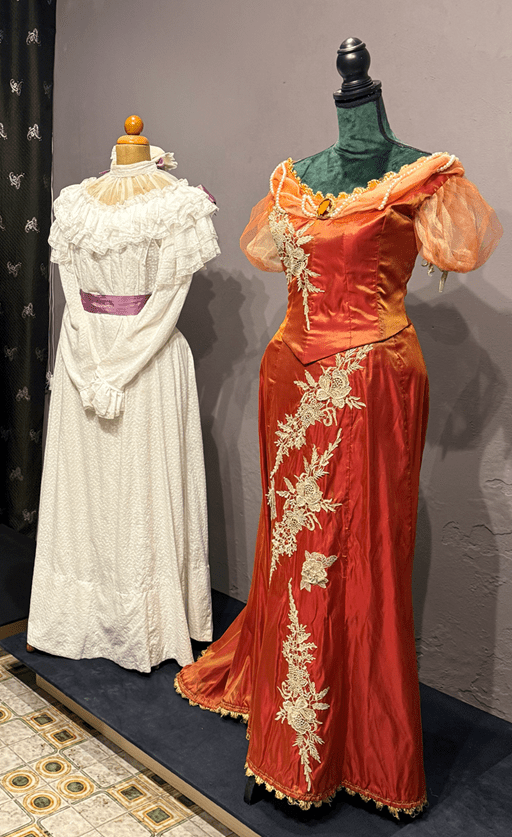
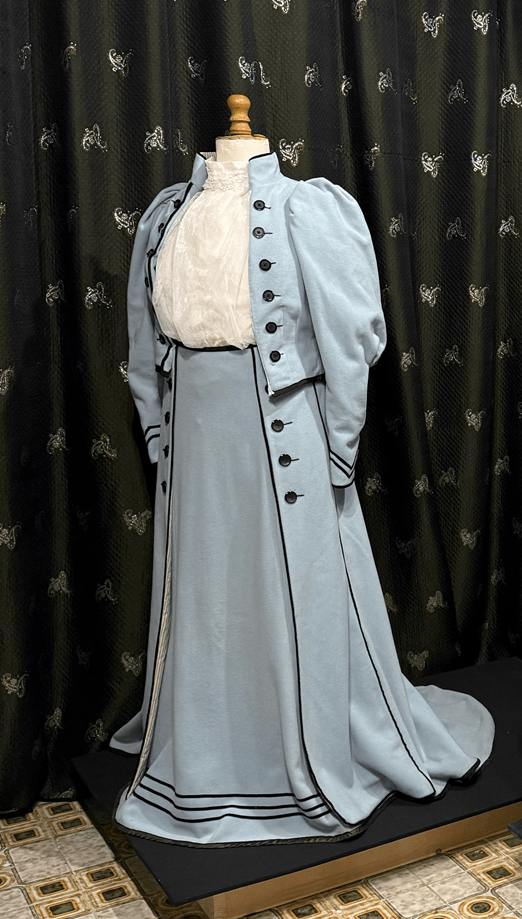
At the turn of the 20th century, Europe entered a fleeting yet radiant moment known as La Belle Époque—“the Beautiful Era.” It was a time of optimism, artistic flourishing, and cultural refinement, centered around cities like Paris, where fashion became not only an industry, but a form of art. In this world of cafés, salons, and grand exhibitions, clothing evolved into a delicate balance between structure and illusion—designed to appear effortless, yet crafted with extraordinary precision.
The silhouette of this period is instantly recognizable: the elegant S-curve. Achieved through the use of a specially designed corset, the body was gently shaped into a forward-leaning posture, with the chest lifted and the hips pushed back. Unlike the rigid hourglass of the Victorian era, this new form suggested movement, fluidity, and a softer femininity. The figure appeared almost animated, as if in mid-motion, even when standing still.
Garments of the Belle Époque were composed with remarkable complexity, yet they concealed their construction beneath layers of refinement. The typical ensemble combined a fitted bodice with a flowing skirt, often paired with separate blouses and decorative overlays. High collars framed the neck, while sleeves expanded into soft volumes at the shoulders before tapering elegantly toward the wrist. The overall effect was one of grace, lightness, and controlled ornamentation.
Materials played a central role in creating this visual softness. Fine silks, chiffon, lace, and delicate cottons were layered to produce texture without weight. Fabrics were chosen not only for their appearance, but for how they responded to light and movement. Transparency and layering became key elements of design, allowing garments to shift subtly as the wearer moved.
Decoration during this period was intricate, yet never overwhelming. Lacework, embroidery, appliqué, and pleating were applied with a sense of rhythm and harmony. Motifs often drew inspiration from nature—flowers, leaves, and organic lines—reflecting the broader influence of the Art Nouveau movement. Every detail was carefully placed to enhance the silhouette, guiding the eye along the natural curves of the body.
Behind this apparent lightness stood a high level of technical mastery. The construction of Belle Époque garments required precise pattern-making, expert handling of delicate materials, and an understanding of how layers interact. Corsetry, though less visually dominant than in previous decades, remained essential in shaping the overall form. Seamstresses and tailors worked with exceptional care, often combining machine stitching with hand-finishing to achieve both durability and refinement.
What defines La Belle Époque is not only its aesthetic, but its spirit. It was an era that celebrated beauty, leisure, and the art of living—yet it was also a moment suspended between worlds, just before the upheavals of the 20th century. Fashion, in this context, becomes a reflection of both confidence and fragility: a desire to perfect elegance, even as the foundations of that world were quietly shifting.
In the House of Historical Clothing, the Belle Époque collection captures this delicate balance. Each garment is recreated with attention to both visible beauty and hidden structure, revealing the craftsmanship behind the illusion. Here, visitors encounter not only the elegance of the era, but also its subtle complexity—a world where refinement was carefully constructed, and where every detail contributed to the poetry of form.
 House of Historical Clothing